A Captain's Game-Day Checklist for Rec League Teams
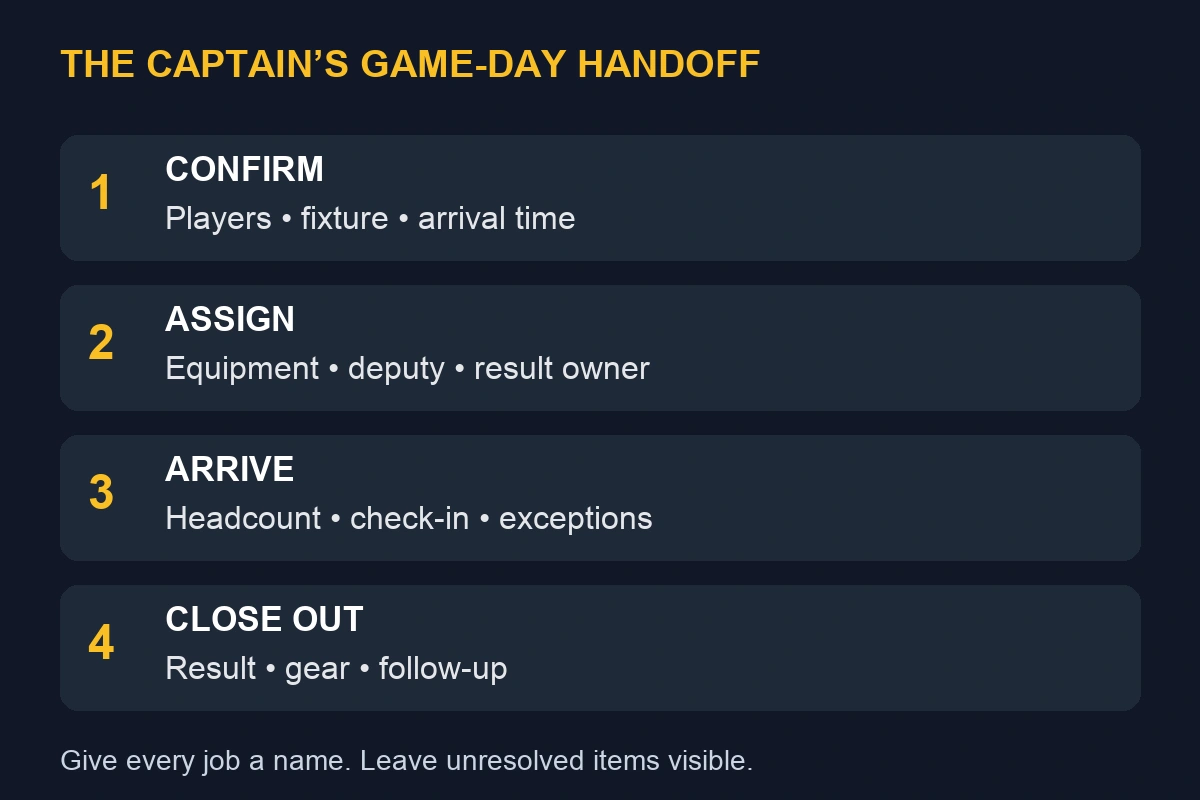
A captain's game-day checklist should answer five questions: do we have the right players, does everyone know where to go, is the equipment covered, who handles problems, and who closes out the night? Give each job a name and a deadline. “Somebody's bringing it” is how a team ends up with twelve water bottles and no ball.
Use the checklist below for an ordinary league game, then adjust it to your sport, venue, and competition rules. The times are suggested planning checkpoints, not official requirements. A hockey team needing time to dress and a volleyball team sharing a gym will need different arrival plans.
Original game-day checklist diagram: confirm, assign, arrive, close out. Open the full-size checklist. Every step is also explained in text below.
The night before: confirm the people and the place
- Check the actual fixture. Confirm the date, start time, opponent, venue, and specific field, court, or rink. Read the latest league update instead of trusting last week's screenshot.
- Count confirmed, eligible players. Compare the list with your league's minimum-player and roster rules. Check any required positions or participation requirements separately; a total headcount alone may not cover them.
- Resolve gaps with the organizer. Follow the league's approved substitute process and cutoff. An unanswered invitation is still an empty spot. Use the substitute-management guide for the broader process.
- Set an arrival target. Allow time for venue access, changing, check-in, and whatever preparation your team needs. Tell players both the arrival time and the game time.
- Name a deputy. Share the checklist and relevant contacts with someone who can take over if you are delayed. The deputy needs the information before you discover traffic has chosen overtime.
Keep a small “unresolved” list: missing response, unapproved sub, uncertain access, or equipment without an owner. Put a person and a follow-up time beside each item. Don't turn uncertainty into a checkmark just to make the list look finished.
Earlier on game day: assign the small jobs
You do not need a committee. You need a few clear handoffs. One person can cover several jobs if the timing works, but “the team” should not appear in the owner column.
- Captain: confirm the roster, relay official updates, and handle the team's required check-in.
- Equipment owner: confirm possession of the shared items your league expects your team to supply. Check condition, then pack them. “In my garage” is a location, not a delivery plan.
- Arrival contact: help new players find the right entrance and direct late arrivals without interrupting every player.
- Result owner: know who records or submits the result, where it goes, and the deadline. Follow the league's process; don't create a competing score record.
- Deputy: take the checklist if the captain cannot attend and make sure loose ends have an owner.
Write the sport-specific equipment list from your league and venue requirements. It might include approved game balls, a scorebook, lineup paperwork, or a team jersey set. Ask players to check their own required personal gear. This list does not replace the applicable equipment or eligibility rules.
For outdoor games, confirm who is monitoring weather and who communicates the official decision. The National Weather Service's outdoor-sports guidance calls for a lightning safety plan covering when to stop, where to shelter, when to resume, and who monitors conditions. It recommends a designated monitor who is not also coaching or officiating. Confirm the organizer's arrangements rather than casually adding weather monitoring to a busy captain's playing duties. See our rainout and rescheduling guide for status messages and makeup logistics.
Send one useful game-day note
Send this through your team's agreed channel after checking the fixture. Replace every bracket, remove irrelevant lines, and keep later changes attached to the same game information. For a wider communication routine, use our team communication guide.
[Team] vs. [opponent] — [day, date]
Arrive: [time]. Game starts: [time].
Venue: [name, address, field/court/rink, entrance].
Wear/bring: [jersey color and required personal items].
Shared equipment: [name] has [items].
Arrival contact: [name and agreed contact method].
If your availability changes: tell [name] by [time], or immediately if later.
Game-status updates: [official channel]. Next update: [time, if needed].
A map pin helps, but add the entrance or playing surface in words. A large sports complex can have several places that all look convincingly like “the field.” Keep private player details out of any public version of the note.
At the venue: resolve exceptions before the start
Check who is physically present against the confirmed list. If someone is missing, contact them directly and tell the appropriate organizer or official about any eligibility or minimum-player issue. Follow the published late-arrival and forfeit rules; don't promise the other captain an exception you cannot authorize.
Complete any required roster or lineup submission, confirm jersey conflicts with the responsible official, and check that shared equipment has arrived. Know the venue's emergency contact procedure, location details, and access arrangements so the team can follow its plan if needed. Report a venue problem to the responsible staff or official instead of improvising a repair.
Keep the final team talk brief: who's here, any approved lineup changes, and who handles communication with officials under your rules. Save the motivational documentary for a night when the next booking isn't already waiting at the door.
After the game: close three loops
- Result: the named person follows the league's score-confirmation and submission process. Flag a disagreement through the proper channel rather than treating one team's notes as the official result.
- Equipment and space: count shared items, collect belongings, remove team rubbish, and follow venue exit instructions. Confirm who takes the equipment home and brings it next time.
- Next action: record anything that needs follow-up, its owner, and a deadline. Confirm the next fixture from the current schedule before sharing it.
If an incident needs reporting, use the league's designated process and keep sensitive details out of the general team chat. Postgame plans can wait until the required closeout is done, even if the group has suddenly become extremely decisive about appetizers.
Copy this captain's handoff card
Keep this in a shared note that your deputy can access. Mark items done only after confirmation; leave unresolved items visible.
- Game: [date / start / arrival / exact venue].
- Players: [confirmed eligible count / required roles covered / unresolved gaps].
- Equipment: [items / owner / packed and confirmed].
- People: [captain / deputy / arrival contact / result owner].
- Official updates: [source / decision contact / next check time].
- At arrival: [headcount / check-in or lineup / unresolved exceptions].
- Closeout: [result submitted / equipment owner / space cleared].
- Follow-up: [issue / owner / deadline].
For example, at a fictional 7 p.m. game with a 6:40 arrival target, Alex owns check-in, Morgan confirms the shared equipment before leaving home, and Sam handles the result. If Alex is delayed, deputy Morgan takes the handoff card and passes equipment arrival confirmation to Sam. Those times and roles are an example to adapt, not a universal match protocol.
Planning your next season? Create a Beer League account, then keep this handoff card with your team planning notes. A good checklist gives the captain enough room to enjoy playing, which was presumably the original idea.