Rec League Playoff Format Ideas: How to End Your Season the Right Way
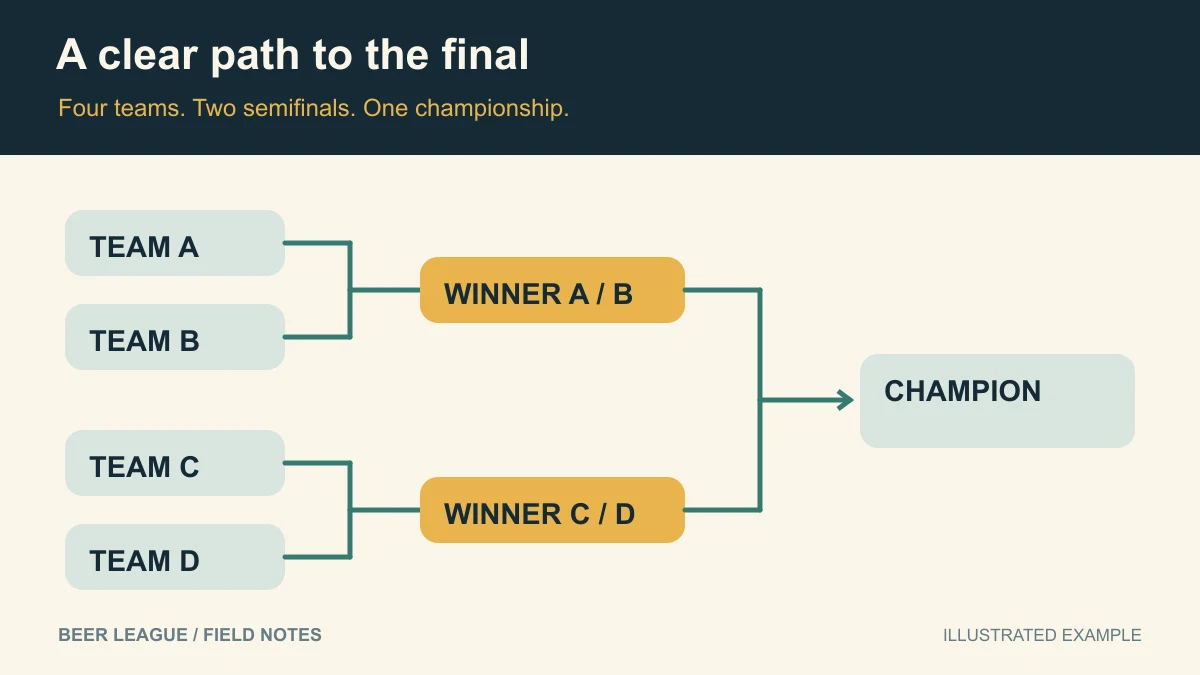
Hero diagram: A four-team single-elimination bracket leads through two semifinals to a champion. View full-size image.
You spent months building a schedule, chasing down fees, and keeping everyone happy. Now the regular season is winding down and it is time for the part everyone actually cares about: playoffs.
Getting the playoff format right matters more than most commissioners think. Pick the wrong setup and you will have half your league checked out after round one, or worse, teams arguing the format was unfair. Pick the right one and you will create the kind of drama and excitement that keeps players coming back next season.
Here are the best rec league playoff format ideas, when to use each one, and how to avoid the most common mistakes.
1. Single Elimination — The Classic
Every game is do-or-die. Lose once and you are done.
Best for: Leagues with 8 or more teams, limited ice or field time, or when you want maximum intensity in the fewest games possible.
Pros: Simple to run, creates instant stakes, wraps up fast. Every single game matters and your players will feel it.
Cons: One bad game and a great team is out. For rec leagues where people are paying to play, getting bounced in one night can sting.
Pro tip: Seed teams by regular season record so the best teams earn an advantage. Nobody wants the top two teams meeting in round one because of a random draw.
2. Double Elimination — Second Chances
Teams need to lose twice before they are eliminated. After your first loss you drop to a losers bracket and keep playing.
Best for: Leagues with 6-8 teams where you want more games and a bit more fairness.
Pros: One off night does not end your season. The eventual champion truly earned it. More total games means more ice time or field time for everyone.
Cons: Takes longer. The bracket can get confusing if you are not careful about explaining it. The team coming from the losers bracket sometimes has to win two finals games which can feel like a slog.
Pro tip: Use a bracket tool or app to visualize the bracket for your players. Trying to explain double elimination in a group chat is a recipe for confusion.
3. Round Robin Playoffs
Every qualifying team plays every other qualifying team once. The team with the best record at the end wins.
Best for: Small leagues with 4-6 teams, or leagues where you want to guarantee everyone gets multiple playoff games.
Pros: Everyone plays the same number of games. No fluky one-game eliminations. The best team almost always wins.
Cons: Can lack the sudden-death drama that makes playoffs exciting. If one team runs the table early, the last few games can feel meaningless. Tiebreakers can get messy.
Pro tip: Set your tiebreaker rules BEFORE the playoffs start. Head-to-head record first, then point differential, then goals or runs against. Publish them so there are no surprises.
4. Pool Play Into Bracket — The Best of Both Worlds
Divide teams into pools of 3-4 for a mini round robin. Top teams from each pool advance to a single elimination bracket.
Best for: Larger leagues with 10 or more teams, or end-of-season tournament events.
Pros: Guaranteed multiple games for everyone, then the elimination drama kicks in for the final rounds. Seeding from pool play makes the bracket feel earned.
Cons: Requires more time slots. Scheduling is more complex. You need to figure out cross-pool seeding if pools are uneven.
Pro tip: This format works especially well if you turn your playoffs into a weekend tournament event. Add some food, drinks, and maybe a trophy ceremony and you have created something people will talk about all offseason.
5. Top Half Gets In, Bottom Half Goes Home
The simplest qualifying rule: finish in the top half of the standings and you make the playoffs. Everyone else watches.
Best for: Leagues that want the regular season to actually matter.
Some rec leagues let everyone into the playoffs regardless of record. That is fine if your goal is maximum participation, but it removes any incentive to try during the regular season. If the team that went 2-10 can still win the championship, why did anyone bother showing up in October?
Limiting the field makes the regular season meaningful and gives your top teams the reward they earned.
6. The Consolation Bracket
Run your main championship bracket AND a consolation bracket for eliminated or non-qualifying teams.
Best for: Keeping everyone engaged through the end of the season.
The biggest problem in rec league playoffs is the teams that get eliminated early. They paid for a full season and now they are sitting at home while four teams battle it out. A consolation bracket gives them something to play for, even if it is just bragging rights and a funny trophy.
How to Pick the Right Format
Ask yourself three questions:
- How many time slots do you have? Limited availability pushes you toward single elimination. More slots open up double elimination or round robin options.
- How competitive is your league? Hardcore competitive leagues love single elimination drama. More casual leagues prefer formats that guarantee multiple games.
- What do your players actually want? Seriously, ask them. A quick poll in your group chat takes two minutes and saves you a week of complaints.
Common Playoff Mistakes to Avoid
- Not publishing the format early enough. Announce your playoff format at the START of the season, not two weeks before it begins. Players want to know what they are playing for.
- Unclear tiebreakers. Every format needs tiebreaker rules decided in advance. Do not figure this out when two teams are tied for the last spot.
- Ignoring schedule conflicts. Playoff games matter more than regular season games. Give teams as much notice as possible and avoid scheduling championship games on holiday weekends.
- No trophy or prize. It does not have to be expensive. A fifteen dollar trophy from Amazon or a ridiculous homemade belt gives your champions something to brag about. The silly trophies are often the most memorable.
Make Playoffs Easy on Yourself
Running playoffs by hand is a pain. Tracking brackets, updating standings, sending schedule reminders — it adds up fast when you are also trying to play in the league yourself.
BeerLeagues handles all of this for you. Standings update automatically, schedules push to your players, and you can manage everything from your phone. It is built specifically for rec league commissioners who are tired of spreadsheet chaos.
Whether you go single elimination or full round robin into a bracket, having the right tools makes the difference between a playoff run your league remembers and one that falls apart over a scheduling mixup.
Your players showed up all season. Give them a playoff format worth playing for.