How to Start a Pickleball League (The Complete No-BS Guide)
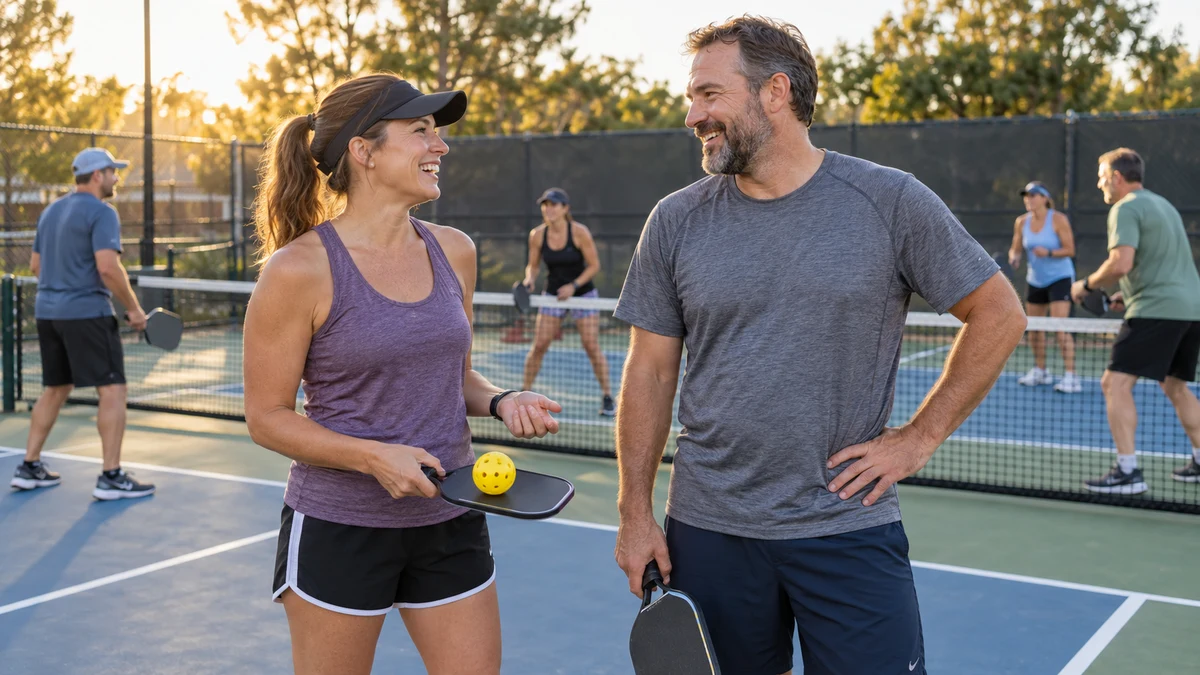
Hero image: AI-generated illustrative scene. Adult players with solid pickleball paddles and a perforated ball. View full-size image.
Pickleball is the fastest-growing sport in America, and it's not even close. What started as a quirky backyard game has turned into a full-blown phenomenon — courts are popping up everywhere, paddle sales are through the roof, and your local rec center probably has a waitlist just to play.
So naturally, someone in your group is going to say it: "We should start a league."
Great idea. But running a pickleball league is a lot more than just showing up and playing. You need structure, scheduling, a way to handle sign-ups, and — let's be honest — a plan for when Dave inevitably argues about the score.
Here's everything you need to know to start a pickleball league that actually works.
Step 1: Figure Out What Kind of League You Want
Before you do anything else, decide what you're building. Pickleball leagues come in a few flavors:
- Round robin / social leagues — Everyone plays everyone, emphasis on fun. Great for beginners and mixed skill levels.
- Competitive ladder leagues — Players ranked by skill, challenge matches, standings. For the folks who track their third-shot drops.
- Doubles leagues — Fixed or rotating partners, usually the most popular format.
- Pickup / drop-in leagues — No commitment, just show up and play. Lowest barrier to entry.
Most new leagues should start as social doubles. It's the sweet spot — structured enough to feel like a real league, casual enough that people aren't scared to join.
Step 2: Lock Down Your Courts
This is where most leagues hit their first wall. Pickleball court time is competitive these days.
Options for court access:
- Public parks — Free but unreliable. You might show up and find the courts full of randos.
- Rec centers / YMCAs — Many offer block booking for leagues. Usually $50-150/session depending on your area.
- Tennis facilities — Lots of tennis clubs are adding pickleball lines. Dual-use courts work fine.
- Dedicated pickleball facilities — The gold standard, but newer and not everywhere yet.
- Churches and schools — Gyms with portable nets. Cheap, often free, but indoor only.
You'll need at least 2 courts for 8-12 players and 4 courts for 16-24 players. Plan for 2-hour blocks minimum — matches go faster than tennis, but you need buffer time for warmups and rotation.
Pro tip: Get a recurring reservation. Nothing kills a league faster than scrambling for court time every week.
Step 3: Set Your Format and Rules
Keep it simple, especially at first. Here's a format that works for most casual leagues:
- Games to 11, win by 2 (standard pickleball scoring)
- Rally scoring optional — traditional side-out scoring is fine, but rally scoring speeds things up if you're tight on time
- Round robin rotation — everyone plays 4-6 games per session
- Random or skill-matched pairings each week
- Season length: 6-8 weeks is the sweet spot
Write your rules down and share them before the first night. You don't need a 40-page rulebook — a one-pager covering scoring, sportsmanship, and sub policies is plenty.
For the love of the game, establish a line call policy up front. Self-officiated pickleball can get heated. "Benefit goes to the opponent" is the standard, and posting it keeps things civil.
Step 4: Handle Sign-Ups and Communication
This is where most rec league organizers lose their minds. Group texts are chaos. Facebook groups are slightly better chaos. Email chains are where hope goes to die.
You need a system. Specifically, you need:
- A sign-up form or registration page — know who's in, collect contact info, maybe skill level
- A roster — names, contact info, availability
- Weekly communication — schedule, court assignments, any changes
- RSVP tracking — who's coming this week, who needs a sub
This is exactly the kind of thing BeerLeagues was built for. Set up your league, invite players, manage your roster, track RSVPs, and handle payments — all in one app. It works for pickleball just as well as it works for hockey or softball. No more spreadsheet gymnastics.
Step 5: Figure Out the Money
Running a league costs money. Courts aren't free (usually), and someone has to buy the balls. Here's how to handle it:
Common fee structures:
- Per-season fee — $40-80/player for an 8-week season. Collect upfront.
- Per-session fee — $5-10/week. Flexible but harder to manage.
- Free (court costs split) — Works for small groups on public courts.
Whatever you choose, collect money before the season starts. Chasing payments mid-season is miserable and people ghost when they owe you $30.
Digital payments are non-negotiable in 2026. Venmo, Zelle, or — better yet — use a league management app with built-in payment collection so you're not playing accounts receivable on top of organizer.
Step 6: Build Your Player Base
You need 12-24 players for a solid league. Here's where to find them:
- Your existing pickleball group — if you're already playing pickup, you have a ready-made roster
- Local rec center bulletin boards — physical and digital
- Facebook groups — search for "[your city] pickleball." These groups are massive and hungry for organized play.
- Meetup.com — still works for sports groups
- Nextdoor — surprisingly effective for local sports
- Your facility's email list — if you're at a rec center, they might promote for you
Start with a core group of 8-10 committed players and grow from there. It's better to have a tight group of regulars than 30 people who flake every other week.
Step 7: Manage Skill Levels (Or Don't)
Skill disparity is the #1 league killer in pickleball. A 2.5 player getting steamrolled by a 4.5 isn't fun for anyone.
Options:
- Self-rated skill levels — Ask players to rate themselves (2.0 to 5.0 scale). People lie, but it's a start.
- Separate divisions — If you have enough players, split into A and B divisions.
- Handicap scoring — Lower-rated players start with points. Fair but complicated.
- Mixed pairings — Pair a strong player with a weaker player each round. Keeps things balanced and social.
For a casual league, mixed pairings with rotating partners is the move. Competitive leagues should use self-ratings with an adjustment period — if someone rated themselves 3.0 and they're clearly a 4.0, bump them up after week 2.
Step 8: Run a Smooth Game Night
Your weekly league night should run like a well-oiled machine:
- 15 min before: Courts set up, nets checked, balls out
- Start time: Post matchups, assign courts. Don't wait for stragglers.
- During play: Rotate matches every 15-20 minutes. Keep a whiteboard or use an app.
- After: Record scores, announce next week's schedule, grab a beer
Designate a league night captain (even if it's you every week). Someone needs to be the decision-maker when a ball clips the line and two grown adults are about to throw down over it.
Step 9: Keep People Coming Back
Starting a league is easy. Keeping it going is the hard part. Here's what separates leagues that last from leagues that fizzle out after 4 weeks:
- Consistency — Same day, same time, same place. Every week.
- Communication — Send a reminder 24-48 hours before. Every week.
- Social element — Post-play drinks, an end-of-season party, a group chat with trash talk
- Track standings — Even casual players like seeing their name on a leaderboard
- Recognize people — MVP awards, most improved, best sportsmanship
The secret sauce? Make it easy and make it fun. If joining your league feels like signing up for a mortgage, people won't bother. If showing up every Tuesday is the highlight of their week, you'll have a waitlist.
Ready to Get Started?
Starting a pickleball league doesn't have to be complicated. Pick your format, find your courts, gather your people, and use BeerLeagues to handle the logistics — scheduling, RSVPs, payments, rosters, all of it. It's free to start, and it'll save you hours of headache every single week.
Now go start that league. Your local pickleball addicts are counting on you.