How to Run a Rec League Draft Night (Without It Turning Into a Disaster)
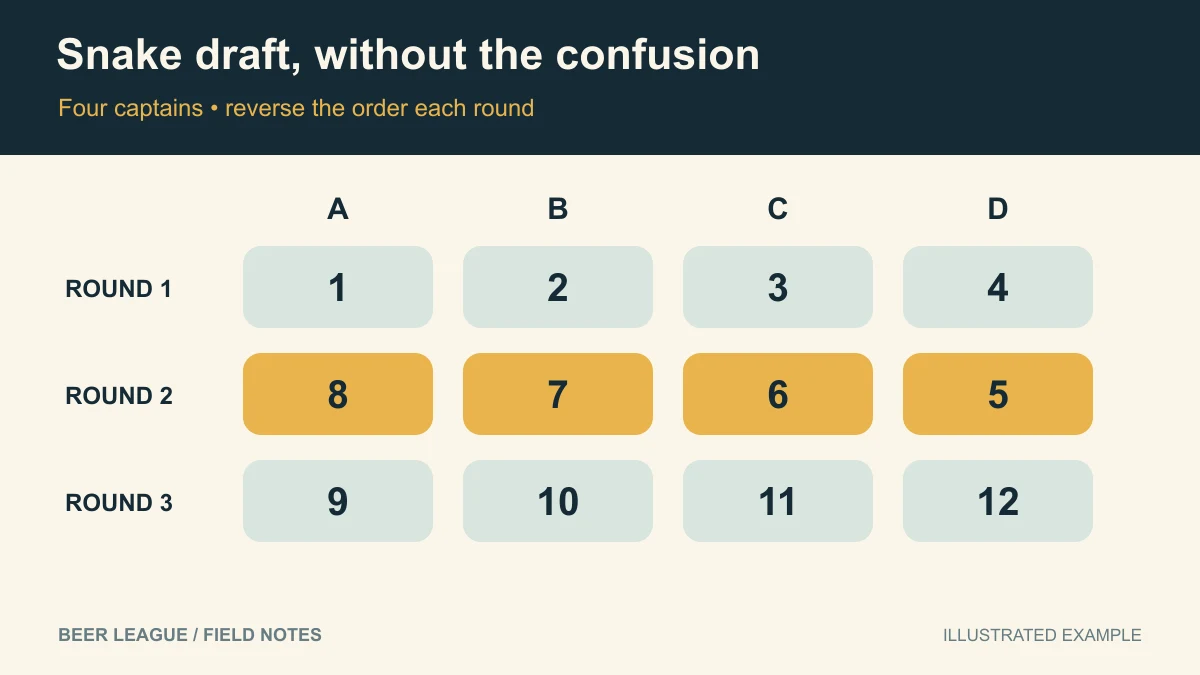
Hero diagram: A four-captain snake draft shows picks 1–12, reversing the second round. View full-size image.
So you've decided to run a draft for your rec league. Bold move. Draft nights are either the best night of the season or a total train wreck — there's really no in between. Done right, it's the event that gets everyone hyped before a single game is played. Done wrong, you've got grown adults yelling at each other over who gets Dave the goalie.
Here's how to run a draft night that's actually fun, fair, and doesn't end friendships.
Why Bother With a Draft at All?
Not every league needs a draft. If you've got established teams that come back every season, skip this article and go grab a beer. But if you're dealing with any of these situations, a draft makes sense:
- You've got a pool of free agents who need to be placed on teams
- Teams are wildly unbalanced and it's ruining the league
- You're starting a new league from scratch
- You want the social event that comes with draft night (honestly, this alone is a good enough reason)
A well-run draft creates balanced teams, gives everyone a stake in the outcome, and builds community before the season starts. It's also a hell of a lot more fun than you just assigning people to teams in a spreadsheet at midnight.
Pick Your Draft Format
There are a few ways to run a rec league draft. Each has trade-offs.
Snake Draft
The classic. First pick in round one gets last pick in round two, and it snakes back and forth. This is the fairest format and what most people expect when they hear "draft." If you're not sure what to do, go with this one.
Auction Draft
Every captain gets a budget (say, $100 in fake money) and bids on players. Way more strategy, way more chaos. Great for experienced leagues, but it takes longer and can confuse newcomers. Save this for year two.
Blind/Random Draft
You rank players by skill level, then distribute them evenly across teams using a random or round-robin method. No captains, no drama. Good for leagues where competitive balance matters more than the draft experience itself.
Hybrid: Captain + Random
Captains draft the first 2-3 rounds, then remaining players are randomly distributed. Gives captains some control without dragging the whole night out. This is sneaky good for bigger leagues.
Before Draft Night: Do Your Homework
The draft itself is the fun part. The prep is where commissioners earn their beer money.
Player Evaluations
You need to know who you're working with. If this is your first season, have players self-rate on a 1-5 scale and then adjust based on what you know. If you've got returning players, use last season's stats or your own eye test. Don't overthink it — just get people into rough tiers:
- Tier 1: Your best players. These are going early.
- Tier 2: Solid, reliable, show up every week.
- Tier 3: Average or new — the backbone of rec sports.
- Tier 4: Beginners or the "I'm just here for the beer" crowd. Every league needs them.
Select Your Captains
Pick captains who actually know the player pool. Drafting blind is painful for everyone. Good captain candidates are people who:
- Have played in the league before
- Won't sandbag (picking all their friends on one team)
- Can handle the pressure without being a jerk about it
- Will actually show up to draft night
How many captains? One per team. Groundbreaking stuff, I know. For draft order, draw numbers from a hat. Simple, transparent, no accusations of rigging.
Set the Rules in Advance
Write down the draft rules and send them out before draft night. Things to decide:
- Format (snake, auction, etc.)
- Time limit per pick (30-60 seconds keeps things moving)
- Can captains trade picks? (Adds fun but adds complexity)
- Are there position requirements? (e.g., each team must draft at least one goalie)
- What happens if a captain doesn't show?
Get this stuff locked in before everyone has two beers in them.
Draft Night Setup
Location matters. You want somewhere with:
- Enough space for all your captains and spectators
- A screen or whiteboard visible to everyone
- Beer (optional but strongly recommended)
- Wi-Fi if you're running things digitally
A bar or restaurant with a back room is the classic choice. Some leagues do it at the rink or gym. Wherever you go, make it feel like an event — not a business meeting.
Your Draft Board
You've got two options:
Old school: Whiteboard or poster board with sticky notes for each player. Satisfying to move names around. Looks cool. Takes more prep.
Digital: A shared screen with a spreadsheet, draft app, or league management tool. Faster, easier to track, and you can share results instantly after. If you're using BeerLeagues, you've already got your roster and player list ready to go — makes the whole thing smoother.
Running the Draft
Here's your game plan for the actual event:
- Welcome everyone. Quick overview of the rules. Two minutes max.
- Announce the draft order. Pull names from a hat if you haven't already.
- Start the clock. 30-60 seconds per pick. If someone takes too long, they get auto-assigned the next best available. Harsh? Maybe. Effective? Absolutely.
- Announce each pick clearly. "Team 3 selects Mike Johnson." Update the board.
- Keep the energy up. Cheer. Roast bad picks. This is supposed to be fun.
- Handle trades quickly. If you allow mid-draft trades, have a simple process: both captains agree, commissioner approves, move on.
- Close it out. Announce final rosters, take a photo of the board, send it to everyone.
The Commish's Secret Weapons
A few things that separate a good draft night from a great one:
- A timer on the screen. Nothing keeps things moving like a visible countdown.
- Background music. Draft night playlist. Trust me.
- Food. Wings and pizza. You're the commissioner, not a caterer, but people love you for it.
- A "consolation pick." If someone gets the last overall pick, let them pick first in a bonus round or give them schedule preference. Softens the blow.
After the Draft
Draft night doesn't end when the last pick is made. Here's your post-draft checklist:
- Send out final rosters immediately. Everyone's excited — ride that wave. Use your league app or a group text.
- Post the schedule. If it's ready, drop it right after rosters. If not, give a firm date.
- Handle complaints privately. Someone always thinks their team sucks. Listen, nod, remind them it's rec league.
- Collect fees. If you haven't already, draft night is a great time to collect. People are in the mood to spend. An app like BeerLeagues makes this painless — players can pay right from their phone, and you don't have to chase anyone down.
Common Draft Night Disasters (and How to Avoid Them)
"My buddy didn't get drafted." Have a plan for undrafted players. Supplemental round, or assign them to the team with the fewest players. Nobody should leave feeling unwanted at a rec league.
"The teams aren't balanced." If one team looks stacked after the draft, the commissioner can make adjustments. You're not the NFL — the goal is fun, competitive games, not dynasty building.
"Someone drafted their entire friend group." This is why you set rules in advance. Consider limiting picks from the same previous team, or use a hybrid format where randomness balances out buddy picks.
"The draft took 3 hours." Strict time limits. Fewer rounds of active drafting. More random assignment for later rounds. You're running a rec league, not a hedge fund.
The Bottom Line
A draft night is one of the best things you can do for your league. It builds excitement, creates balanced teams, and gives everyone a story before game one. Keep it simple, keep it fun, and keep the beer cold.
If you're running a league and want to make draft night (and everything after it) easier, check out BeerLeagues. Rosters, scheduling, payments, stats — all in one place. So you can focus on the important stuff, like arguing about whether Dave really deserved to go in the first round.