How to Start and Run an Adult Rec League: A Practical Checklist
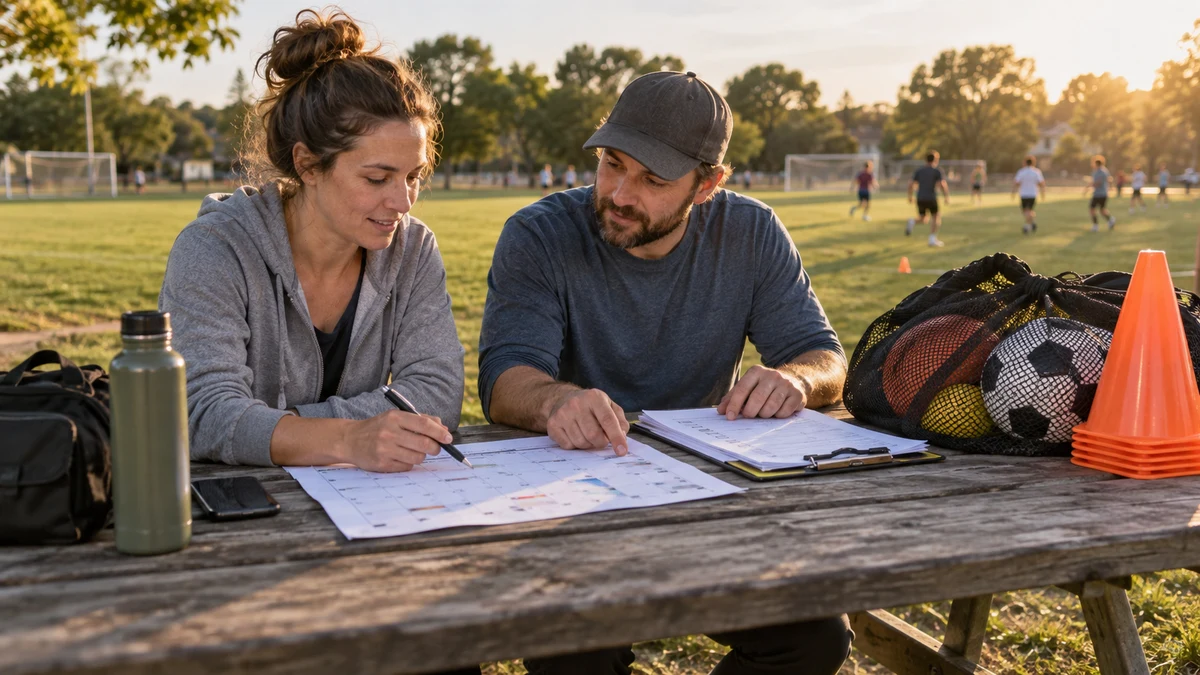
Hero image: AI-generated illustrative scene. Organizers planning a season beside a community field. View full-size image.
To start an adult rec league, confirm a venue, a workable number of teams, a budget, and a clear set of expectations before collecting registrations. Then build the schedule and assign the recurring jobs. A modest first season that you can reliably deliver is a better starting point than a large promise.
Updated September 18, 2026. This guide combines our starting-a-league and running-a-beer-league articles.
Write a one-page season brief
Use this as your decision sheet before you invite players:
Sport and format: ______
Intended skill level: ______
Team count and roster size: ______
Season dates and weekly time window: ______
Venue and named contact: ______
Regular-season games per team: ______
Playoffs or end-of-season event: ______
Team formation: existing teams / draft / organizer assignment
Estimated fee and what it includes: ______
Minimum registration needed to proceed: ______
Decision date if registration is below that minimum: ______
Organizer and backup organizer: ______
Decide whether you want a social league, a more competitive recreational season, or recurring pickup games. Those formats need different roster and scheduling processes. For sessions with changing participants, read the pickup organizing guide.
Confirm the venue before promising dates
Ask the facility for the available dates, playable time, booking terms, cancellation process, equipment access, and any participation requirements. Record the agreement and a contact for game-day problems. Include setup and cleanup in your booked time.
Make a list of closures and holidays. Identify makeup capacity rather than assuming an extra court or rink slot will appear later. Facility and insurance requirements vary; confirm the requirements for your actual activity and location with the relevant provider.
Build a budget from costs you can explain
Include venue bookings, officials, equipment, required services, payment processing, and any planned event. Keep a visible contingency allowance. Decide who bears costs if a team withdraws or registration falls short, and communicate your cancellation and refund terms before payment.
For a hypothetical example, $2,400 of venue time, $900 for officials, $180 of equipment, and a $300 contingency totals $3,780. With six paying teams that is $630 per team before any other applicable costs. If only five teams register, the same budget is $756 each. These are illustrative numbers, not market prices or a recommended fee.
Use actual quotes and test your budget at the minimum viable enrollment. Our fee collection guide covers communicating deadlines and tracking what is owed.
Set roster and participation expectations
Publish your roster size, eligibility, skill expectations, substitution rules, and approach to missed games. Say whether teams arrive together, captains draft, or organizers assign players. If teammate requests are optional, label them that way.
Use the copyable registration form to collect the information you actually need. Keep private details restricted to the people who need them. Have a process for correcting registrations and handling a player who withdraws.
Write down how disputes and conduct complaints are reported and who makes decisions. A simple, consistent process is more useful than rules invented after the first argument. Keep social events optional and welcoming to people who do not drink.
Build and review the season schedule
A round robin is a useful option when you want every team to face the others. Six teams require 15 games for one full cycle. Use the complete matchup examples and scheduling checks, then put the fixtures into confirmed venue slots.
Give captains a review deadline. Check team conflicts, venue conflicts, late starts, and home/away balance. Identify playoffs separately if you plan them; a league does not have to hold playoffs, but players should know the format at signup.
Assign weekly jobs to named people
- Organizer: venue coordination, final schedule decisions, and league-wide updates.
- Captains: availability, eligible substitutes, and communicating with their players.
- Score reporter: submit results and resolve a disputed entry.
- Backup: handle the night if the organizer cannot attend.
Choose one published schedule and one primary update channel. Tell players when to RSVP, where to report an absence, and where cancellations appear. Do not make attendance depend on finding a message buried in an unrelated conversation.
Opening-night checklist
- Venue access, equipment, officials, and a backup contact are confirmed.
- Captains know the arrival time, location, roster rules, and game format.
- Registration and any required participation steps have been checked.
- The schedule and update channel work on a player's phone.
- Someone is responsible for recording results and following up on problems.
After the first night, ask captains what confused players and fix it before week two. For recurring responsibilities, use the commissioner checklist.
End with a clear next step
Publish final results, thank the volunteers, and ask a few specific questions about timing, competitive balance, and organization. An optional social event or awards night can help the group stay connected. Ask who is interested in returning before you commit to the next season's bookings.
When you are ready to organize your league in one place, create a Beer League account and check current plans and limits. Start with the workflows your first season needs, then add complexity only when the league benefits from it.