How to Deal With No-Shows in Your Rec League (Without Losing Your Mind)
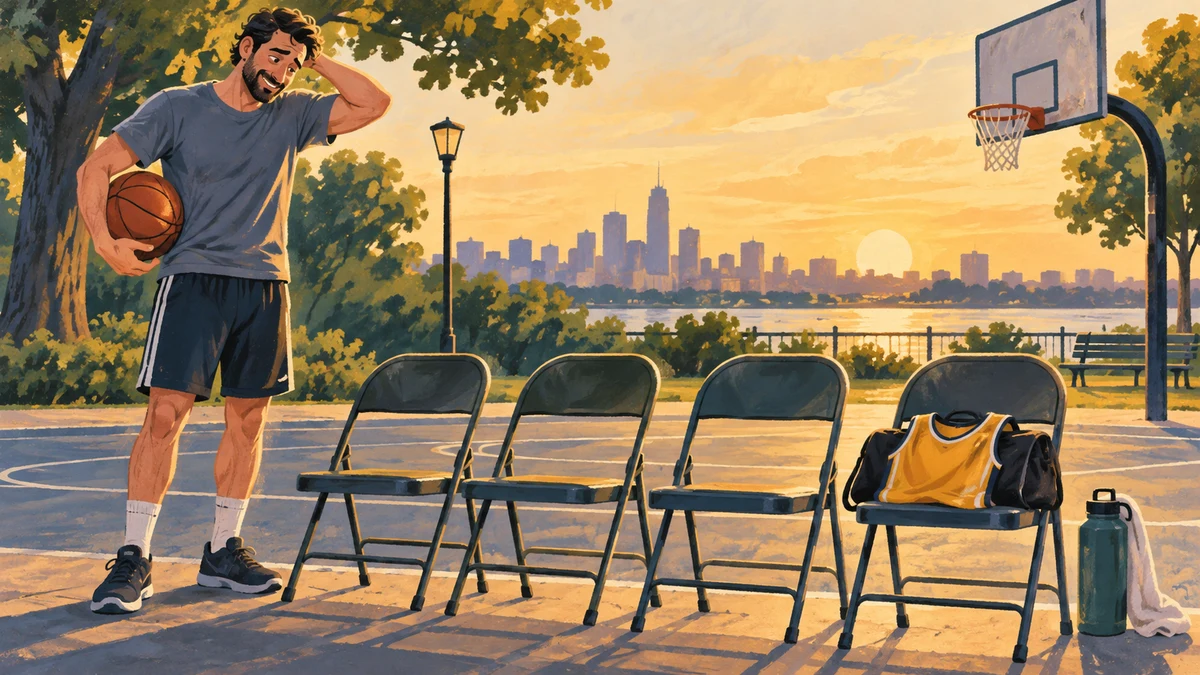
Hero image: AI-generated illustrative scene. An amused captain waits beside empty chairs and a jersey-wearing sports bag. View full-size image.
You've booked the ice. You've paid the refs. You've confirmed the roster three times. And then 20 minutes before puck drop, your phone lights up: "Hey man, can't make it tonight. Something came up."
If you've run a rec league for more than one season, you know this pain intimately. No-shows are the single most annoying part of organizing adult sports. They screw up team balance, waste money, and slowly erode the trust that holds your league together.
But here's the thing — you're never going to eliminate no-shows completely. Adults have jobs, kids, and lives that don't revolve around Tuesday night hockey. The goal isn't perfection. It's building systems that minimize the damage and keep games fun even when someone inevitably flakes.
Why People No-Show (It's Not Always Laziness)
Before you go nuclear on your flakiest player, it helps to understand why people bail:
- They forgot. No reminder, no calendar invite, no nudge. Life happened and your game slipped their mind.
- They're conflict-avoidant. They knew yesterday they couldn't make it but didn't want to deal with the guilt of telling you.
- No consequences. They've bailed before and nothing happened, so why bother being reliable?
- The commitment felt optional. If sign-up was too casual, people treat attendance the same way.
Each of these has a different fix. And the best leagues address all of them.
Set Clear Attendance Expectations From Day One
Most no-show problems start at registration. If you never told people attendance matters, you can't be surprised when they treat it like a suggestion.
Before the season starts, spell it out:
- How many games can you miss before losing your spot?
- What's the deadline for notifying you of an absence?
- Is there a financial penalty for no-shows?
- Who's responsible for finding their own sub?
Put this in writing. Not buried in paragraph 47 of your league rules — front and center during registration. People are way more likely to respect a policy they agreed to upfront than one you spring on them mid-season.
Use RSVP Systems (And Actually Enforce Them)
The single biggest weapon against no-shows is a proper RSVP system. Not a group text. Not a "who's in?" post on Facebook. An actual system where players confirm or decline for each game with a deadline.
This does two critical things:
- Forces a decision. Players have to actively say yes or no instead of passively ghosting.
- Gives you lead time. When someone declines 48 hours out, you have time to find a sub. When they text you from the parking lot? Not so much.
BeerLeagues has built-in RSVP tracking that makes this dead simple — players tap in or out from their phone, you see the roster in real-time, and you can set RSVP deadlines that actually mean something. No more chasing people down in group chats.
Build a Sub List Before You Need One
Every smart commissioner has a sub list ready to go. These are players who aren't committed to a full season but would love to jump in when a spot opens up.
Where to find subs:
- Players from other nights. Someone who plays Thursdays might be happy to double up on Tuesdays occasionally.
- Former league members. People who sat out this season but still want to play.
- Local social media groups. Facebook groups, Reddit, Nextdoor — post that you're looking for on-call players.
- Friends of current players. Ask your roster to each bring one potential sub contact.
Keep this list organized with names, positions, skill levels, and contact info. When someone bails at 4 PM, you want to blast out a "who's available tonight?" message to 15 people, not scramble through your contacts.
Money Talks: Use Financial Incentives
Nothing motivates attendance like having skin in the game. Here are a few approaches that work:
Pay upfront for the full season. When someone has already paid for 12 games, they're a hell of a lot more likely to show up for all 12. Contrast this with pay-per-game, where skipping costs nothing.
No-show fees. Charge $10-20 for unexcused no-shows (no notice within 24 hours). This isn't about making money — it's about making flaking slightly painful. Most leagues that implement this see no-show rates drop by 50% or more.
Deposits. Collect a $50-100 deposit at the start of the season that gets refunded if the player meets a minimum attendance threshold (say, 80% of games). Miss too many? The deposit goes toward league costs.
Collecting fees and tracking payments used to be a nightmare of Venmo requests and spreadsheets. Tools like BeerLeagues let you handle all of this digitally — players pay through the app, and you can see instantly who's paid and who hasn't.
Send Reminders (Yes, Adults Need Them Too)
It feels patronizing, but it works. A simple reminder 24-48 hours before game time reduces no-shows significantly. Not because your players are irresponsible — because everyone's juggling a million things and a quick nudge keeps your game on their radar.
The best reminders include:
- Date, time, and location (don't make them look it up)
- Current RSVP count ("We have 8 confirmed, need 2 more")
- A simple way to confirm or decline
Automated reminders through a league management app beat manual texts every time. You've got enough to worry about without becoming everyone's personal calendar.
Have a Game-Day Protocol
Even with the best systems, you'll still have nights where someone bails last-minute. Having a protocol prevents panic:
- Blast your sub list immediately. First come, first served. Don't wait to see if the original player "might still make it."
- Have a plan for uneven teams. Can you play 4-on-4 instead of 5-on-5? Does the team with fewer players get a power play? Figure this out before it happens.
- Track it. Keep a record of who no-showed and when. Patterns become obvious fast, and data makes uncomfortable conversations easier.
Address Repeat Offenders Directly
There's always one. The player who's "in" every week and bails every other game. At some point, you need to have the conversation.
Keep it simple and direct: "Hey, I've noticed you've missed 4 of the last 6 games. The rest of the team is counting on a full roster. Are you still able to commit to the season, or would you rather move to the sub list?"
Most people will either step up or gracefully bow out. The few who get defensive weren't going to be reliable anyway. Better to have an honest sub than a flaky regular.
The Nuclear Option: Waitlists
If your league has more demand than spots — congratulations, you have leverage. Run a waitlist. When a rostered player hits their no-show limit, they get moved to the waitlist and the next person in line gets promoted.
This sounds harsh, but it's actually the fairest system. The people who show up consistently get rewarded. The people who don't make room for someone who will. And the mere existence of a waitlist motivates attendance because nobody wants to lose their spot.
Prevention Beats Punishment
The best rec leagues rarely need to enforce penalties because they've built a culture where showing up is the default. That starts with:
- Making games fun. People don't skip things they look forward to.
- Building community. When you're letting down friends, not just a league, it hits different.
- Respecting everyone's time. Start on time, end on time, communicate clearly. If you run a tight ship, people treat it seriously.
- Using the right tools. A league that runs smoothly — easy RSVPs, clear schedules, simple payments — removes every excuse except the legitimate ones.
No-shows will never be zero. But with the right systems, they become a minor annoyance instead of a league-killing problem. Set expectations early, make it easy to communicate, and don't be afraid to have direct conversations when someone's not pulling their weight.
Your league — and every player who actually shows up — deserves that much.
Tired of chasing down RSVPs in group chats? BeerLeagues handles RSVP tracking, roster management, payment collection, and game reminders — so you can focus on actually playing. Try it free.